
Want to have fun this holiday season? Explore a Pumpkin with a toddler! Toddlers (ages about 1-3) are at an earlier stage: their STEM experiences are more sensory, more about discovery, exploration, and simple cause-and-effect. STEM doesn’t need complex steps. Just offer plenty of chances to touch, see, compare, and ask questions.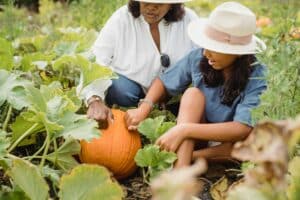
Why Science Helps Toddlers
At the toddler stage, children are building connections: motor skills, vocabulary, thinking about the world. Science experiments support naming, observing, exploring safely, and enhancing curiosity. It also supports social interaction (doing with parent or caregiver), and builds early math ideas (big vs small, more vs less) in everyday play.
Simple Experiments & Ideas for Toddlers
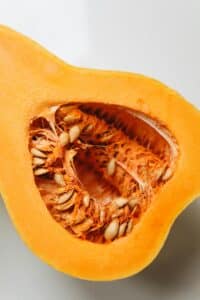
- Pumpkin Sensory Exploration & Seed Counting
- Let toddlers explore a halved pumpkin: feeling pulp, touching seeds, smelling. Scoop seeds out.
- Science: senses (touch, smell).
- Math: count seeds (“one, two, many”). Use small bowls to sort seeds and pulp.
- Engineering: use tools like scoops or spoons.
- Technology: photograph the stages of scooping, or use a simple app to play back images.
- Leaf Rubbing & Leaf Matching
- Go on a leaf walk. Collect leaves of different shapes and sizes. Use paper and crayons to do leaf rubbings. Match shapes.
- Science: noticing texture, shape, color.
- Math: match big vs small, count leaves.
- Engineering: experiment with stacking leaves, building little towers.
- Technology: perhaps draw shapes on a tablet or take photos to compare.
- Sink or Float with Small Pumpkins or Seeds
- Fill a container with water. See which objects float (a small pumpkin, a large seed, leaf). Predict (“Do you think it will float?”), then test.
- Science: cause and effect, properties of objects.
- Math: more vs fewer, measuring volume with cups.
- Engineering: design a boat or float with leaves or pumpkin skins to test how many seeds it can carry.
- Technology: simple recording (“float” vs “sink” stamps or marks), or use parent-child drawing.
- Seed Sprouting in Cups
- Soak pumpkin seeds, then place in damp paper towels or in soil. Let toddlers watch daily changes: small root, sprout.
- Science: plant life cycle.
- Math: count days, maybe number of sprouts.
- Engineering: container choice.
- Technology: photos of each day to show change over time.
Tips for Parents Working with Toddlers
- Keep experiments short. Toddlers have short attention spans, so one simple activity a day is plenty.
- Do it together—toddlers love to explore with a grown-up. Comment on what you see: “This feels slimy,” “Look how many little seeds!”
- Use safety: supervise with small seeds, knife work (if any) must be done by adult. Stick with non-toxic materials.
- Be flexible: let things get messy! The mess often means more learning.
- Celebrate their discoveries with every “wow” builds confidence.
Whether preschoolers or toddlers, the key is curiosity, exploration, and engaging all parts of STEM in ways that match the child’s developmental stage.
Come see how The Gingerbread House engages our Toddlers each day thanks to the wonderful teachers who care for your child!