

Spring has a way of inspiring fresh starts. Sunlight pours through the windows, birds start singing again, and suddenly every parent notices fingerprints on the glass and toys tucked into places they don’t belong. If you’re attempting spring cleaning with small children underfoot, you’re not alone.
At The Gingerbread House, we understand that families with young children are living busy, full lives. Spring cleaning doesn’t need to be perfect to be meaningful. In fact, it can even become a learning experience with a little patience and flexibility.
Lower the Bar (Just a Little)
Let’s start here: spring cleaning with young children is rarely fast, quiet, or efficient. And that’s okay. According to Zero to Three, young children thrive when they feel included in everyday family activities, even if they can’t “help” in traditional ways. Progress still counts, even if it takes longer than planned.
Instead of aiming for spotless, try focusing on:
- One drawer instead of the whole room
- One load of laundry instead of the entire closet
- Short bursts of cleaning rather than marathon days
Turn Cleaning Into Play
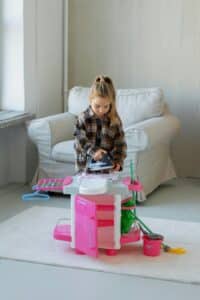
Young children love to imitate adults. When you invite them into simple cleaning tasks, you’re not just tidying up, you’re teaching life skills.
Try these child-friendly ideas:
- Give toddlers a damp cloth to “wipe” low surfaces
- Let preschoolers match socks while folding laundry
- Turn toy cleanup into a color or shape game
The American Academy of Pediatrics reminds parents that play is one of the most powerful ways children learn responsibility, coordination, and confidence. At Gingerbread, children practice similar skills during classroom routines like learning that caring for their space is part of caring for themselves and others.
 Create Simple, Predictable Routines
Spring cleaning doesn’t have to happen all at once. In fact, children respond better when tasks are broken into predictable routines. The Centers for Disease Control and Prevention (CDC) notes that consistent routines help young children feel safe and reduce stress. When children know what to expect, they’re more likely to cooperate and parents feel less overwhelmed.
Consider:
- One small cleaning task each day
- Cleaning during a regular nap or quiet time
- Setting a short timer and stopping when it ends
Expect Interruptions (and Build Them In)
If you’re cleaning with little ones nearby, interruptions are part of the process. Snacks will be requested. Shoes will go missing. Someone will need help immediately. Research from Harvard University’s Center on the Developing Child emphasizes that responsive caregiving, even during everyday tasks, strengthens emotional development. Sometimes stopping to read a book or answer a question is more important than finishing the job.
Instead of fighting it, plan for it:
- Keep cleaning supplies nearby
- Choose tasks you can pause easily
- Build in breaks for connection
Focus on Connection Over Perfection
Spring cleaning can be an opportunity to slow down and model positive habits rather than striving for perfection.
Talk with your child about:
- Why we take care of our belongings
- How cleaning helps our home feel calm
- Working together as a family
At The Gingerbread House, we encourage children to participate in classroom routines in age-appropriate ways, helping them feel capable and confident. These early experiences build independence that carries over into home life.
A Gentle Reminder for Gingerbread Families
If spring cleaning feels messy, loud, or incomplete don’t worry, you’re doing it right. Children learn best when they are included, supported, and loved through everyday moments. Your home doesn’t need to look perfect to be nurturing. If you’d like support in building routines, independence, and confidence in your child, we’d love to partner with you.
Schedule a tour at The Gingerbread House to see how we support whole-child development every day.